

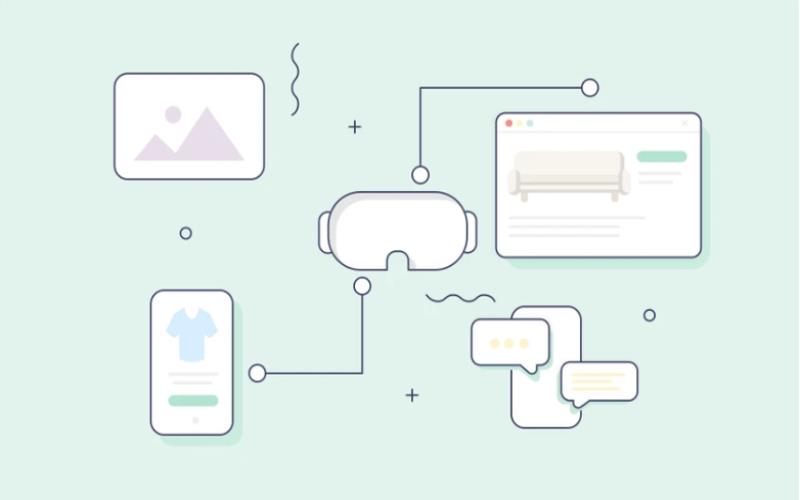
In recent years, the ability to move and receive information automatically from device to device and person to person has entered the realm of reality through something known as the Internet of Things (IoT). Whether someone has IoT devices in their home or at work smart homes, IIoT sensors, wearables, smart IoT digital signage and the like, IoT devices rely upon dynamic content to keep persons informed and engaged. Yet the arena of IoT is not the same as a regular arena where a content management system (CMS) or a content delivery network (CDN) would apply. Regular CMS and CDN implementations operate on the basis of static updates, staging content for rendering and accessibility at a later time as opposed to real-time, API-driven opportunities.
A Headless CMS integrated into the IoT experience would provide a scalable, customizable approach to content creation and distribution. Since a Headless CMS does not rely on its frontend and backend for operation, it allows businesses to push real-time content updates to their IoT apps and devices so that users never have to worry about having to update the service on their end to get the most relevant, updated information. This real-time engagement bolsters the expected automated, personalized, and engaged environments IoT intends to establish. Therefore, a Headless CMS would be an essential resource for any business looking to adopt IoT.
The Role of Headless CMS in IoT Content Management
The problem with IoT content management is that IoT encompasses everything from different platforms to concurrent surges to the need for real-time refreshes. Why choose a headless CMS? Because it provides the flexibility and scalability needed to manage IoT-driven content efficiently. Therefore, IoT is why the Headless CMS is ideal instead of a standard CMS, which allows for content on a non-changing site, and a Headless CMS, which transfers similarly formatted content through APIs to be leveraged within any applicable application.
With a Headless CMS, businesses need not worry about needing to store content in one location and needing to update in other businesses can push the same updates to smart devices, virtual assistants, and IoT-enabled apps from merely one stored content source. Notifications can be controlled from one control panel while product details and omni-channel experiences are simultaneously assessed. Businesses can adjust what is conveyed on the smart device displaying the weather forecast, what the virtual assistant says upon powering up, or what is being played on the connected car’s infotainment system. A Headless CMS enables content to change constantly.
Real-Time Content Updates for Smart Home Devices
Smart home technology relies on the provision of content that exists at that very point for on-demand application. Smart speakers, for example, along with smart thermostats, security systems, and home assistants must be in a constant state of awareness of when content changes so they can respond and relay accurate information in the moment. A Headless CMS fosters this back-end connection between content storage and IoT devices, not to mention real-time delivery. Think of a smart speaker that gives you the news and weather or customized suggestions without having to download an update. A smart thermostat that displays your energy consumption in the moment, with suggestions for adjustments based on where you’ve been moving about the house. This is what Headless CMS supplies for such a growing, integrative, effective living experience with smart technology but still delivers consistent content presentation across all channels.
Enhancing Industrial IoT with Dynamic Data Management
Numerous companies rely on industrial IoT devices to track their machines and optimize workflows for predictive maintenance. Thus, a content management system that satisfies the requirement for such real-time use and offers personnel/stakeholder data simultaneously would be beneficial. A Headless CMS would facilitate this, allowing the industrial IoT apps to communicate and get useful information.
For example, a production unit might utilize a Headless CMS to relay expectations for accessing operational dashboards, alert technicians of shop defaults and necessary repairs, and showcase real-time production statistics across locations. A transportation and logistics organization may have a Headless CMS interface with IoT devices with GPS functionality to provide real-time routing status updates, automatically triggered notifications for defaults, and detection of preferred shipping routes. When a Headless CMS acts as the nerve center of the Industrial IoT ecosystem, all pieces are connected for effective communication and decision-making but with the appropriate flexibility to disseminate information.
Personalizing Content for Wearable IoT Devices
Wearable technology smart watches, fitness trackers, AR glasses, etc. requires customized content presentation for improved engagement with consumers. A Headless CMS enables these types of enterprises to develop and administer customizations that facilitate in-the-moment updates, health evaluations, and even gaming. Wearable IoT devices could work with Headless CMS in the same way. A wearable like a fitness tracker, for example, can render new exercise suggestions through a Headless CMS if it detects a user exercising for three days in a row. A smartwatch can tap into a Headless CMS for stock prices, sports scores, or news and render information to a user when they look down at their wrist and need to know something.
In addition, wearable IoT devices that feature AR can access a Headless CMS to overlay projections/content that shows a user which way to go, how to work out, or even what to enjoy for leisure in real-time. Thus, with all of this opportunity, the ability for Headless CMS to be non-linear is the best way that wearable IoT can create more appropriate, personalized experiences as they occur.
Optimizing Smart Retail with Real-Time Digital Signage Updates
IoT enabled digital signage allows retailers to advertise products with static advertisements and real-time ads, not to mention customized suggestions while browsing the store. In addition, a Headless CMS means that retailers can manage and deploy content changes remotely, so in-store signage is always relevant and consistent with the actual selling effort.
Consider a boutique that wants its storefront windows to look different digitally to reconfigure what’s shown as on display. A Headless CMS can allow the boutique to log into its storefront windows digitally to present the latest styles, seasonal discounts, and even stock for particular customers accessed through demographic study.
Grocery store franchises are not far behind with similar Headless CMS and IoT sensor capabilities, as digital storefronts that possess automated Headless CMS can present dynamic pricing and inventory availability to assist with in-store purchases via a digital signage screen. Whether through dynamic abilities to sell based on assessed digital inventories or options rendered for purchase, utilizing a Headless CMS for digital signage can assess purchase needs for customers, allowing a retailer to effectively respond to them for stronger engagement while in-person shopping.
Secure Content Distribution for IoT Networks
Another significant concern that a Headless CMS solves is content security. IoT networks generally contain many devices connected to each other, exchanging and relaying vast amounts of sensitive information. A Headless CMS facilitates the secure delivery of content for authentication, encrypted APIs, and role-based access control permissions. Therefore, all sensitive content stays out of the wrong hands without compromising the integrity of content needed for various IoT applications.
Think of a physician using IoT connected medical devices. She needs to update dashboards, medicine alerts, and health monitoring reports. She can do this in real time and safely with a Headless CMS. The same type of ability to update content quickly through a Headless CMS applies to financial services: banking apps, ATMs, IoT financial kiosks. Being able to control content in such a secure fashion gives these types of businesses the opportunity to avoid leaking confidential customer data and stay in regulatory compliance.
Future-Proofing IoT Content Strategies with Headless CMS
As more and more IoT devices enter the marketplace, companies must prepare for a time when content is managed and altered among the thousands of connected endpoints. A Headless CMS can expand to accommodate increasing content demands and reliably serve content to any IoT frontend that will inevitably be developed in the future. The second best enhancement for future IoT content strategy comes from integrating AI/ML with an IoT content strategy. An AI-powered Headless CMS could anticipate usage and change content accordingly, altering things on its own that make the IoT applications that much more efficient.
For instance, an AI-powered Headless CMS (or one that works in conjunction with IoT) could turn any appliance into an IoT device by detecting when, for example, people tend to use a blender and automatically presetting options for use to ease accessibility. In addition, as IoT continues to grow, companies must make sure their content management system will be compatible with future innovations such as 5G, edge computing, and decentralized content delivery. A Headless CMS is the compatibility with future IoT innovations that will keep companies in sync within an ever-evolving digital landscape.
Leveraging Headless CMS for Smart City IoT Implementations
Smart cities boast a higher integration of connected smart technology throughout the city environment. IoT technology related to public infrastructure creates improved efficiencies, safety, and improved public works efforts. Therefore, a Headless CMS is necessary for content distribution and management of real-time digital signs, transportation efforts, environmental tracking sensors, and even community disaster warning systems.
For instance, a municipality could use a Headless CMS to push real-time traffic updates, weather alerts, and public transportation schematics to IoT-enabled displays and citizen engagement applications; an environmental agency could push real-time air quality updates and water usage data, meaning citizens always have the most relevant and up-to-date information. Cities using a Headless CMS for their IoT smart city ecosystems can streamline transportation, reduce friction in communication, and provide citizens with easier access to everything they require.
Using Headless CMS to Power AI-Driven IoT Analytics and Insights
With the IoT and AI, a treasure trove of data is generated, and real-time decision-making access is something that companies should take advantage of. A Headless CMS enables a company to house, evaluate, and publish AI discoveries across multiple machines and applications from one source. This is true for IoT-enabled fleet tracking.
This is true for logistics companies that need a Headless CMS to communicate predictive maintenance updates, new shipping routes, or live updates about where shipments are at any moment. This is true for smart factories where IoT analytics powered by AI support better efficiencies, altering a setting on one machine automatically and notifying the foreman that another machine needs help. A Headless CMS supports this as content delivery spurred by AI encourages action and, subsequently, real-time awareness and efficiency.
Integrating Blockchain with Headless CMS for Secure IoT Content Management
With the expansion of IoT environments, data security and access are among the greatest concerns for connected device enterprises. Blockchain offers a decentralized approach to secure content delivery, meaning IoT-generated data can be permissioned and not distorted, yet easily verified. A headless CMS can connect via APIs to the blockchain ecosystem to guarantee IoT efforts are transparent, authenticated, and safe.
For example, hospitals might connect IoT-driven medical devices and, at the same time, update patient health records on a blockchain then a Headless CMS could spread news of new approvals to only permitted users. Supply chain companies could have a similar Headless CMS solution with a blockchain to easily determine where products were manufactured, if they’re in transit, and where, and even easier reporting on the compliance side for regulations. Thus, the intersection of blockchain with Headless CMS creates a more secure, IoT-driven content management solution that’s stronger, protects private information, but also facilitates easy access across all connected fields.
Conclusion
The future content management systems will undoubtedly be Headless CMS and the IoT. From security to real-time updates and customization, it all works in tandem with Headless CMS for smart homes, wearables, retail kiosks, and Industrial IoTs. Therefore, the longer the IoT ecosystem develops and stabilizes into reality, the more benefits an enterprise will receive from a Headless CMS for all content-related needs the acquired flexibility and scalability over time and the access to offerings and solutions that are generated from ongoing developments only benefit enterprises down the line. From increased intelligent features, security, or personalized content, the Headless CMS is the solution for any IoT-connected space.
