

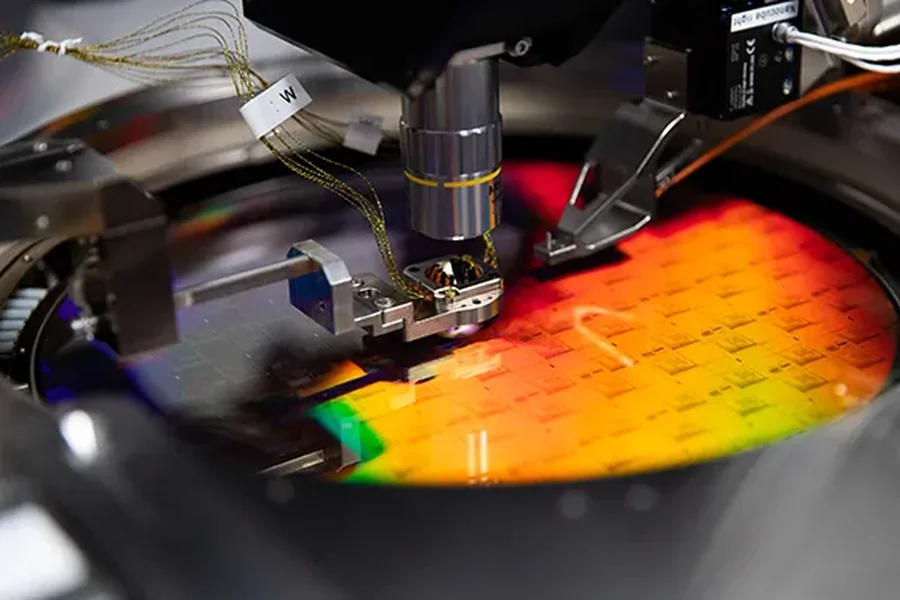
Quantum computing places unprecedented demands on the physical foundations of semiconductor systems, and as quantum architectures expand beyond isolated demonstrations, material behavior increasingly shapes whether systems remain stable, controllable, and manufacturable. Erik Hosler, a semiconductor innovation strategist with experience in advanced fabrication and materials integration, acknowledges that quantum computing compels materials engineering to operate under a fundamentally different set of constraints than those that guided classical semiconductor development.
Unlike classical processors, quantum devices operate within extremely narrow tolerance margins. Small variations in electrical behavior, thermal conditions, or material interfaces can undermine coherence and disrupt control. These sensitivities elevate materials engineering from a supporting role to a central determinant of system viability.
As quantum systems scale, materials decisions ripple across fabrication, packaging, and control infrastructure. Engineering judgment must account for interactions rather than relying solely on isolated performance metrics. New approaches become necessary not because existing materials fail outright, but because their behavior must be understood and managed in far more exacting ways.
The Breakdown of Classical Materials Assumptions
Traditional semiconductor materials engineering evolved around predictable operating regimes. Silicon-based systems tolerated modest variability because classical logic remained functional despite noise and drift. These assumptions enabled decades of integration and scaling.
Quantum systems expose the limits of this model. Qubits respond to disturbances that would be inconsequential in classical circuits. Electrical leakage, surface roughness, and minor defects introduce instability that accumulates rapidly.
As a result, materials’ assumptions that once guided design decisions no longer hold. Engineering must shift from a tolerance-based mindset to a precision-driven approach. Materials engineering becomes an exercise in managing sensitivity rather than accommodating variation.
Electrical Isolation as a Primary Materials Challenge
Electrical isolation plays a crucial role in maintaining the stability of quantum systems. Control signals must interact with qubits precisely while avoiding unintended coupling. Materials determine how effectively these boundaries are maintained.
Conventional materials struggle to provide sufficient isolation at the required scales. Parasitic effects and leakage currents introduce noise that disrupts quantum states. These issues intensify as integration density increases.
Materials engineering, therefore, prioritizes isolation characteristics over conventional performance metrics. Wide-bandgap materials offer advantages by reducing leakage and supporting higher breakdown thresholds. Engineering decisions are increasingly focused on minimizing disturbance rather than maximizing throughput.
Thermal Behavior Outside Conventional Operating Models
Thermal management in quantum systems challenges traditional materials frameworks. Quantum devices often operate at low temperatures while surrounding electronics generate heat. Materials must mediate this imbalance without introducing instability.
Conventional semiconductor materials exhibit thermal behavior optimized for room-temperature operation. At cryogenic or near-cryogenic conditions, conductivity and expansion properties shift. These changes influence device behavior in ways that classical models fail to capture.
Materials engineering must explicitly account for temperature-dependent behavior. Thermal conductivity, expansion mismatch, and heat dissipation pathways become design variables. Stability depends on how materials behave across temperature gradients rather than at nominal conditions.
Interfaces as the Dominant Source of Risk
Interfaces between materials exert outsized influence in quantum systems. Charge trapping, defect formation, and lattice mismatch often originate at boundaries rather than within bulk materials. These effects scale with system complexity. Classical systems tolerate a degree of interfacial imperfection because logic thresholds absorb variability.
Materials engineering must therefore treat interface quality as a primary concern. Deposition methods, surface preparation, and post-processing steps all significantly influence the outcomes. Integration discipline becomes more important than material substitution.
How New Materials Reshape Fabrication Strategy
Introducing new materials into quantum fabrication flows affects more than device performance. Tool compatibility, process windows, and inspection methods must adapt, and fabrication strategy changes alongside material choice.
Wide-bandgap materials, such as GaN and SiC, exhibit distinct etch behaviors and defect signatures compared to silicon. Traditional process assumptions no longer apply uniformly. Yield risk increases without deliberate adjustment.
Erik Hosler explains, “Working with new materials like GaN and SiC is unlocking new potential in semiconductor fabrication.” This insight reflects how materials engineering reshapes the fabrication discipline rather than extending it unchanged. Potential emerges when materials are integrated with awareness of manufacturing realities. Progress depends on coordination rather than experimentation.
Manufacturability as a Governing Constraint
Materials innovation holds limited value if it undermines manufacturability. Quantum systems require consistency across fabrication runs to support scaling. Materials engineering must respect these constraints.
CMOS-aligned fabrication frameworks provide a reference point for evaluating new materials. Compatibility with existing tools and control systems reduces disruption. Materials that align with these frameworks integrate more effectively.
AI supports this evaluation by correlating process parameters with manufacturing outcomes. Models highlight behaviors that influence yield and stability. Engineering decisions become evidence-driven rather than speculative.
Yield Behavior in Quantum-Relevant Materials
Yield management becomes increasingly complex as quantum-relevant materials are introduced into fabrication flows. Defect modes differ from those of silicon norms, and traditional inspection heuristics lose their effectiveness. Learning curves lengthen without structured analysis.
Materials engineering must anticipate these differences early. Inspection strategies evolve to capture subtle variations linked to functional risk. Yield stabilization becomes a learning process rather than a tuning exercise. AI identifies patterns that link material interactions to yield-specific outcomes.
Packaging and Materials Interaction at System Scale
Materials behavior extends into packaging and assembly decisions. Differences in thermal expansion, mechanical strength, and heat conduction influence long-term reliability. Packaging becomes a materials problem.
Quantum systems magnify these interactions due to sensitivity and density. Poor coordination introduces stress, drift, and calibration instability. Materials engineering must consider packaging implications from the outset. AI assists by modeling thermal and mechanical interactions across materials. Designers anticipate consequences before fabrication, and integration benefits from foresight rather than correction.
Preserving Materials Knowledge Across System Generations
Materials engineering generates insight that risk fragmentation occurs as systems develop. Preserving this knowledge consistently becomes a strategic concern. Without continuity, learning resets across projects.
AI contributes by encoding relationships observed during materials integration. Knowledge remains accessible across teams and facilities. Consistency improves as insight persists. This persistence supports iterative improvement. Materials engineering becomes cumulative rather than reactive. Progress reflects shared understanding rather than isolated success.
Materials Engineering as a Systems Discipline
Quantum computing forces materials engineering to operate as a systems discipline rather than a component-level activity. Electrical, thermal, and interfacial behaviors intersect across architectures. Managing these intersections defines success.
Emerging materials address specific constraints without eliminating complexity. Their value lies in disciplined integration rather than standalone performance. Engineering judgment replaces material optimism.
As quantum systems advance, materials engineering evolves through coordination rather than replacement. GaN, SiC, and similar materials contribute when aligned with fabrication, control, and packaging realities. Quantum scalability depends on understanding how materials behave together under constraint, not in isolation.
