

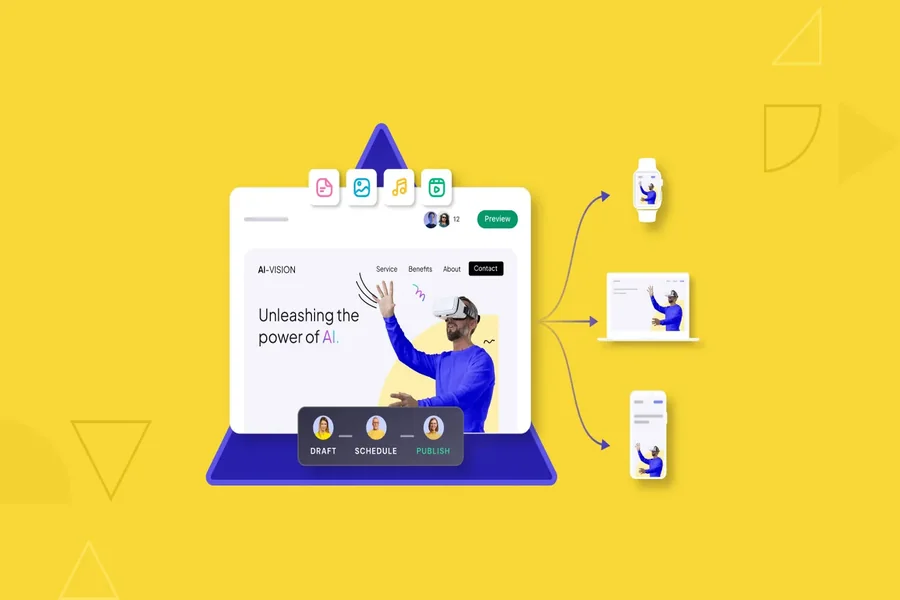
These days, the customer journey hardly ever takes place from awareness to conversion in a linear fashion. They’re on social media and discover a product, then go on a mobile application to learn more about it, use a desktop to check out a brand’s blog post, and end up purchasing in-store or online. Conversion tracking becomes vital for proper campaign adjustments and assessment of return on investment. That’s where the Headless CMS comes into play. A headless system allows content to be structured and delivered via API and to countless entities, so conversion tracking is seamless and effective as each step of the customer journey is related and trackable.
Why You Want to Analyze Cross Platform in Conversion
Conversions don’t happen in a vacuum. A consumer sees an ad on Instagram, browses the webpage, learns about a product’s features on the app, then purchases via an email follow-up. WordPress alternatives open-source solutions support this kind of cross-platform insight by enabling flexible integrations across multiple touchpoints, ensuring every interaction in the customer journey is tracked and optimized. But if companies only analyze the last step, they forget that the email follow-up merely reminded the consumer to do what they already wanted many steps before. Last click conversion analysis is misleading. But with cross-platform access to results, teams understand better what convinced a person to convert after learning what happened along the way.
When companies have a cross-platform understanding, they can better spend their budgets on platforms that give first impressions, those that go deeper into consideration, and those that ultimately get the sale. Channels that might be on a secondary tier of the conversion funnel could be sadly underfunded if only final acquisitions or more overt steps on one channel are assessed. This is dangerous but with central structures and analytics to assess everything together, this is possible through a headless content system.
Where Headless Content Would Support the Journey Map
It’s easy to see how a headless CMS would support the journey spanning across multiple platforms. An average, traditional CMS is linked to one final output source like a website. But headless systems are decoupled from that necessity. Instead, headless content like structured modules exists as reusable blocks delivered via API to websites, apps, emails, social media, or even in-store kiosks. As a result, consumers receive the same message across multiple platforms, helping businesses understand which paths are taken with the joint content.
When content is delivered from one final source, it’s easier to determine where consumers clicked and why based on certain modules and campaigns. For instance, a product description delivered across platforms can show its effectiveness. Meanwhile, a call to action (CTA) provided across channels can be more easily assessed for success. Therefore only with this assessment can support for cross-platform content delivery happen. And only then would businesses have the information at hand to assess how each piece assists in conversion analysis.
Cross Platform Attribution via Structured Data
Cross-platform attribution only works if the data behind it is clean and structured. Headless CMS architecture affords this remote access to a centralized defined ID per content module. So, no matter if a CTA is clicked on a landing page from the desktop or tapped in an application or swiped in an email, it all connects back to that one content block in the CMS.
That means it won’t be double counted across experiences, resulting in ambiguous impressions or misattributions. Engagement metrics won’t reflect “pageviews” or “opens.” Instead, they’ll come from a specifically defined content module that, when run through analytics, can ascertain how that arrangement led to conversion. Furthermore, structured data means easier cross-integration with Google Analytics and CRM systems that possess customer profiles. When companies know how data should be flowing, they can better understand what it means when it’s part of the greater customer profile. Thus, structured data allows for relative assessment across the content-driven descriptive segments used throughout the customer journey.
Micro-Conversions Map Along the Way
Conversions don’t just happen. They happen over time through smaller actions along the way. Someone might view a video, read a whitepaper, click on an expected CTA before finally converting for purchase. With headless CMS architecture, micro conversions can be recorded in defined segmentation across platforms where one person begins and continues their journey and the content modules are accessible across others.
Understanding where people were converted along the way helps businesses understand which content modules apply additional reinforcement. For example, if a download of a case study occurs on desktop but then further down the line, encourages someone to request a demo on their mobile device, that action provides better insight about how secondary content structures can promote intent. It paints the picture across channels as opposed to waiting until conversion action registers to put things into focus. Micro conversions help answer not just what happened but how and why, allowing for marketers to respond accordingly with tweaks to both content and campaigns.
Relative Effectiveness by Platform in Conversion Path
Cross-channel reporting allows businesses to see how effective each platform was in relation to other ones as part of the conversion path. For example, awareness might be generated to the greatest extent on social media but effectively driven to consideration via email. The mobile app might help in the decision stage as it provides easy access to pricing.
Understanding these relative contributions allows marketers to budget for effectiveness. The last touch channel no longer receives full credit it knows where it stands in relation to the others. With content constructed as headless, cross-channel delivery occurs in one environment. Reporting of performance through API also attributes the findings to those assets within that environment, creating a truly relative with comparative context.
Feedback Loops for Future Campaigns
Such findings are only useful if future campaigns can leverage them. Feedback loops are created through headless CMS to feed the findings back into content creation. For example, if a testimonials module works better in mobile than desktop, the headless CMS will inform content creators so they can modify positioning to accommodate.
This makes campaigns iterative instead of static and reliant upon post-mortem analysis. Marketers make changes in real-time instead of waiting until they see a campaign go live across one or multiple ecosystems. They revise messaging, reposition assets, and experiment with new variants while live across channels. The CMS is both the content creator and efficacy creator. Therefore, each subsequent campaign is smarter.
Governance and Compliance for Cross-Platform Tracking
The other element that joins the party when it comes to cross-platform tracking is governance and compliance. Different regions have different data policy laws, and organizations must make sure their analytics aren’t crossing the line. A headless CMS facilitates this inclusion because it adds governance to the content creation experience. For example, certain modules disclaimers, consent boxes can be templated and locked so they’re required and rendered the same across all experiences.
Yet compliance is more than just placing things where people expect them. It’s also about keeping information in certain places. This means API-based integrations must be set to acknowledge permissions to delete or anonymize information. This is governance in play so optimization does not jeopardize brand trust. When compliance is combined with personalization, organizations no longer have to worry about cross-channel campaigns because they know they’ll be operating within the confines of ethical practice and best practice.
AI Insights for Conversion Analysis Going Forward
The final element of cross-channel analysis comes from AI. Where stats let organizations know what consumers ‘did’, AI can predict what they’ll ‘do’. For example, if there’s a trending pattern where people who visit social channels and engage with video modules and then are emailed articles and download a whitepaper are more likely to purchase sooner may be a connection that can be made.
Integrating an AI component into the headless CMS process means that this information can help inform real-time content approaches. The system can prioritize and serve those content modules that inform content with a higher percentage likelihood of helping consumer conversion. This isn’t looking back. It’s projecting goals for the future. As consumers are faced with more complicated journeys, AI can keep the content strategy wheels turning and scaling when needed.
Cross-Channel Conversion Insights for E-Commerce
E-commerce usually has the most fragmented paths: consumers see an ad for a product on social media, they save it to their wish list on the mobile app, they check reviews on the desktop site, and they finally buy after getting an email with a coupon. It’s impossible to know what does the trick without access to cross-channel conversion insights. But campaigns fueled by headless content facilitate product descriptions, images, and CTAs exist across channels and provide the same information while capturing analytics along the way.
API-driven analytics reveal which channels are most important in the conversion. Was the ad on social media successful? Or did the discounted email push someone over the edge? Retailers can make budgetary allocation choices based on effective intelligence and understand what campaigns to tweak using their strongest components. Over time, analytics can show the appropriate e-commerce funnel to create, too, to avoid wasted spend in areas of the funnel that do not necessarily contribute to eventual buying decisions down the line.
Cross-Channel Conversion Insights for SaaS and B2B
SaaS and B2B often have either less fragmented or less tangible conversions as they take longer to come to a decision. Prospects engage with educational blogs to understand offered services or software, attend webinars, download whitepapers, actively engage in price comparisons, and only then do they possibly request a demo. But every action is critical and without clear action and follow-up insights across channels, it’s hard to see how all these pieces fit together.
With headless content, case studies, ROI calculators, and testimonials need to be delivered similarly across web/email/apps so that users aren’t confused; APIs help tie everything back to unified profiles. Insights show which touchpoints bolster pipeline velocity; for instance, if those who download an ROI calculator after a webinar are more likely to reach the decision stage than those who don’t download at any point, SaaS marketers must find a way to incorporate that as part of the optimized journey. Cross-channel insights remove the uncertainty from lead nurturing and allow SaaS and B2B marketers to align content plans with how buyers navigate the funnel.
Conclusion
With the ability to analyze cross-platform conversion paths from headless content, companies can move beyond attribution to a more holistic, data-driven approach. Because structured content is consistent in tracking, micro-conversions reveal ancillary actions, and cross-assessment across platforms demonstrates varying roles of each channel. Feedback loops are always open, governance supervises compliance and AI capabilities future-proof the brand for predictive personalization. Therefore, with the transparent nature of a headless CMS framework, marketers have the data points relative to assess even the most intricate journeys and develop campaigns that facilitate a seamless path from awareness to conversion even if consumers encounter it across multiple platforms along the way.
